Ballet world’s best villains
Rothbart from Swan Lake
Half-human, half-bird, Rothbart is an evil sorcerer: his curse transforms the ballet’s central character, Odette, into a swan. The spell can only be broken if someone who has never loved before swears eternal devotion to her.
Rothbart’s wickedness doesn’t end there. Realising that Prince Siegfried is enamoured with Odette and could potentially lift the curse, he devises a deception. He transforms his daughter, Odile, into Odette’s lookalike. Disguised as the alluring Black Swan, Odette attends Prince Siegfried’s ball, and tricks him into confessing his love to her, effectively condemning Odette to remain under Rothbart’s spell.
Different versions of Swan Lake opt for different endings for Odette and Prince Siegfried. In many traditional stagings, the couple die and their sacrifice frees the swan maidens from Rothbart’s curse. Other interpretations, including Derek Deane’s in-the round staging for English National Ballet, see Odette and Siegfried overcome the sorcerer, and enjoy a happy ending.
Swan Lake is well-known for its iconic choreography, especially the arm movements of Odette and her entourage of maidens, creating a delicate swan-like impression. Rothbart, evil and menacing, is inspired by a nocturnal bird, an owl. As his dark presence looms over the stage, he too flaps his arms, and with them, an enormous, feathery cape, creating the impression of large, imposing wings.

Myrtha from Giselle
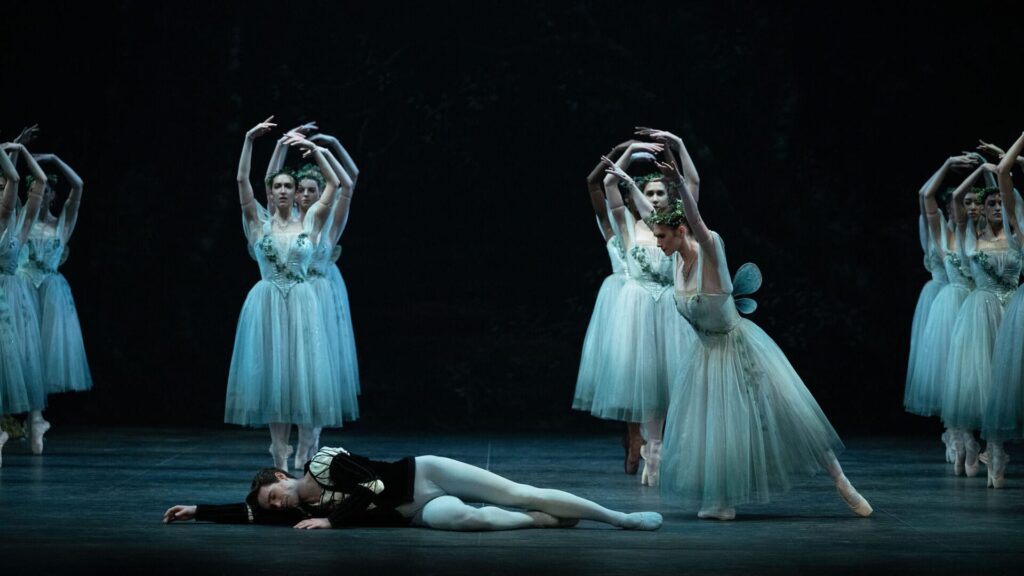
Ethereally beautiful and otherworldly, Myrtha is not as delicate as she looks. As Queen of the Wilis she rules over ghosts of maidens betrayed by men they loved. She is commanding, vengeful and unforgiving, only revealing herself at night when she forces any man she encounters to dance till death.
When Giselle herself is betrayed, she joins the ranks of the Wilis. Unwilling to hurt the man she loves, she chooses to defy Myrtha. Giselle’s grace in saving Albrecht prevents her from an eternal (after)life as a vengeful Wili.
Myrtha was a trendsetter at the time of Giselle’s original 1841 premiere. The Wilis both reflected and influenced feminine beauty ideals of the time: women aspired to achieve the sylph-like look, embodied by Act II’s costumes and choreography. The floating movements, delicate pointework, and long, bell-shaped skirts, were exclusive to female ballet dancers. Their popularity contributed to the rise of the ‘cult of the ballerina’ placing female dancers at the centre of ballet world for the first time.
The Rat King from Nutcracker
Perhaps the most playful villain on this list is the Rat King from Nutcracker. Appearing at the end of Act I, he leads an army of rats to fight the Nutcracker doll and his toy soldiers. His defeat marks a turning point: Clara’s bravery saves her beloved Nutcracker, who is transformed into a Prince, launching the magical journey of Act II.
In many versions around the world, this character is depicted as having multiple heads. Despite having a darkly fantastical feel, this is actually inspired by a real-life phenomenon where rats’ tails get tangled together, resulting in what might seem like a single, many-headed creature.
In our most recent version of this festive ballet, characters from Clara’s dream world are inspired by people she meets in Act I’s Edwardian London. The Rat King mirrors Uromys Grimsewer, the scheming cheese broker and leader of a pick-pocketing gang.

The Evil Stepmother from Cinderella
Cinderella’s Evil Stepmother needs no introduction. Greedy, opportunistic and mean, she exploits Cinderella’s kindness to the benefit of herself and her daughters. When the Prince invites everyone to a grand ball, she forbids Cinderella from attending, determined to secure a royal marriage for one of her own children.
The story of Cinderella exists across many cultures – from ancient Greece to China and Persia. The best-known European version was created in the 17th century by Charles Perrault, a French fairy tale writer.
The ballet adaptation of Cinderella loosely follows Perrault’s story. However, unlike in the book, it’s not just the Stepsisters, but also the Stepmother who tries to fit into the glass slipper, highlighting both her greed and her absurdity.
Unlike the sorcerers and supernatural queens on this list, the Evil Stepmother possesses no magical powers. However, her consistent mistreatment of Cinderella marks her as a true villain.

Carabosse from The Sleeping Beauty
In the ballet The Sleeping Beauty, the antagonist is known as Carabosse, though many will recognise her fairy-tale counterpart as Maleficent (as she was called in Disney’s famous animated adaptation).
Carabosse appears early on in the story, making a surprise appearance at Princess Aurora’s christening. Uninvited to the celebrations, she seeks revenge and curses the young princess to prick her finger with a spindle and die. The Lilac Fairy softens the spell to a hundred-year sleep – but Carabosse’s shadow lingers over the entire ballet.
According to Maria Seletskaja, our Music Director, ‘The Sleeping Beauty is indeed about the eternal struggle between Good and Evil – a theme that runs through many of Tchaikovsky’s scores. Given that the final chord of the ballet is in a minor key, the composer leaves us uncertain about which side truly prevails.’
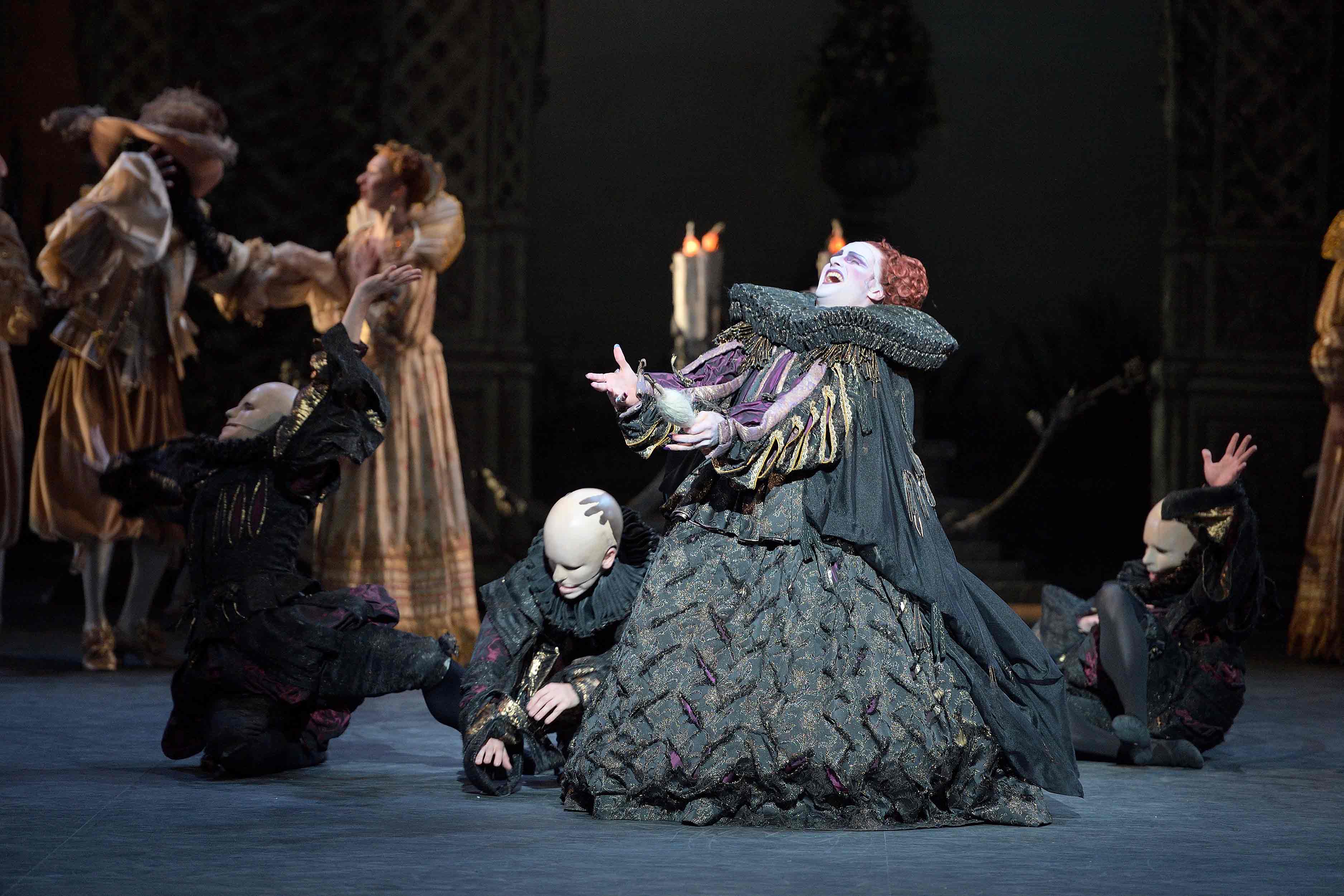
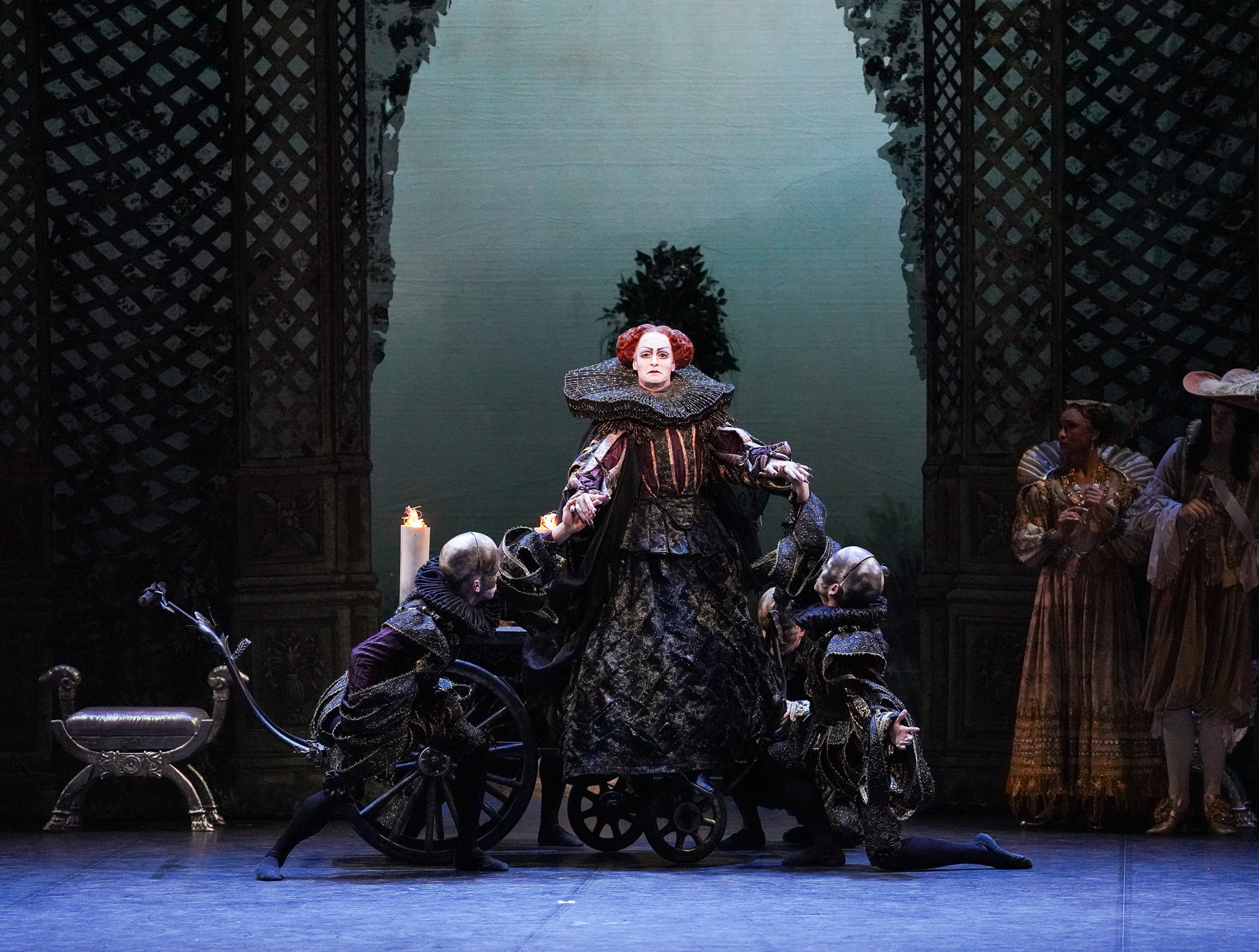
In our version, choreographed by Sir Kenneth MacMillan with costume design by Nicholas Georgiadis, Carabosse is clad in Tudor-inspired costume, cutting a striking figure among the 17th– and 18th-century courtiers. With a red wig, a large ruff collar and white face makeup, the wicked fairy resembles Queen Elizabeth I. Always accompanied by a loyal flock of minions, the role embraces flamboyance and exaggeration – deliciously wicked, and impossible to ignore.
Want to see these unforgettable villains come to life on stage? Find out about our performances and experience the drama, danger, and dark glamour in person.
Related news

The Sleeping Beauty: Interview with Loipa Araújo
Legendary ballerina Loipa Araújo remembers performing The Sleeping Beauty, from her first steps in Cuba as the Fairy of the...

Sir Kenneth MacMillan’s The Sleeping Beauty: Lilac Fairy (Extract)
An enchanting moment by Anri Sugiura as the Lilac Fairy in Sir Kenneth MacMillan’s The Sleeping Beauty.

Mime in Ballet with Cynthia Harvey: Sleeping Beauty, Swan Lake, Giselle
Check out this fascinating insight on mime in ballet, with the one-and-only Cynthia Harvey demonstrating steps from The Sleeping Beauty,...

The Sleeping Beauty: Interview with Manuel Legris
In conversation with Manuel Legris as he shares invaluable insight into coaching English National Ballet dancers for The Sleeping Beauty.

The Sleeping Beauty: In rehearsal with Loipa Araújo
Inside rehearsals for The Sleeping Beauty by Sir Kenneth MacMillan. Emma Hawes and Aitor Arrieta, coached by the legendary Loipa...

The Sleeping Beauty: Grand Pas de Deux (Extract)
A glorious clip from Sir Kenneth MacMillan's The Sleeping Beauty, starring Emma Hawes and Aitor Arrieta.