10 things to look for in English National Ballet’s Nutcracker
From hidden magic tricks to hand-dyed petals, here are 10 things to look out for in this sparkling version of Nutcracker.
1. A familiar place. A different time.
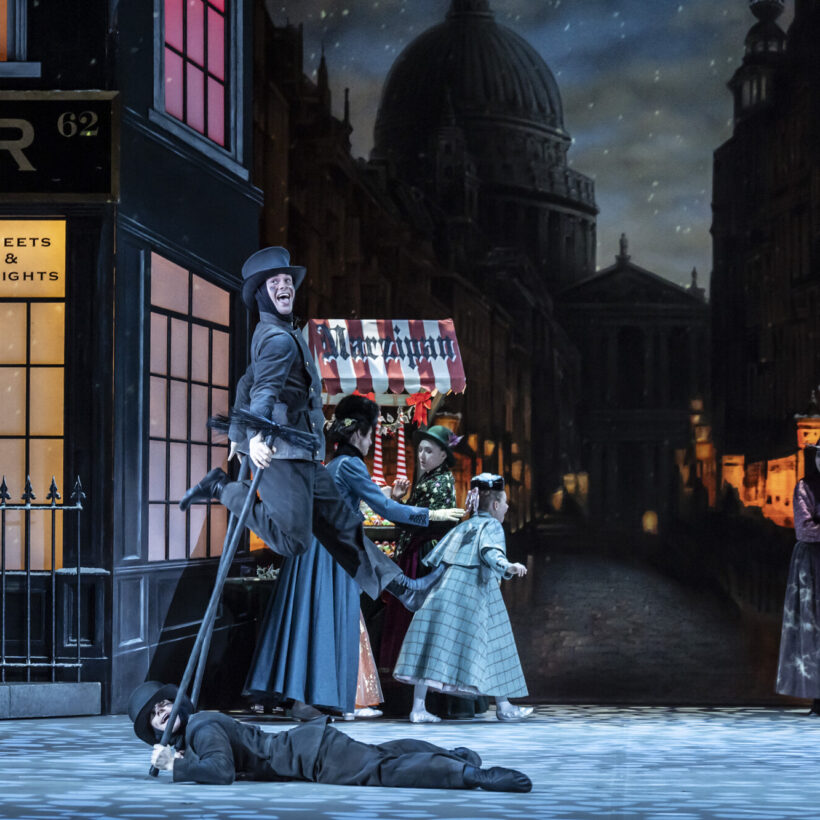
Our production of Nutcracker takes place in the Edwardian period. Audiences are invited to feel the pulse of London in the early 20th century – think prosperity, elegance and the buzz of a city on the move.
On Christmas Eve, Clara and her mother shop at Drosselmeyer’s Sweets & Delights Emporium where she spots an enchanted Nutcracker doll. Outside, the bustle of London unfolds with street markets, carriages, and the soft glow of lamplights announcing the arrival of the festive season. Look closely and you might even spot St Paul’s Cathedral in the background!
It was during this period that the London Coliseum – our Christmas home – first opened its doors in 1904. Designed by the architect Frank Matcham with the ambition of creating the largest and finest music hall, it was described as the “people’s palace of entertainment”. The theatre’s own special atmosphere blends perfectly with the world we see on stage.
2. Keep your eyes peeled – you might just see some real magic!
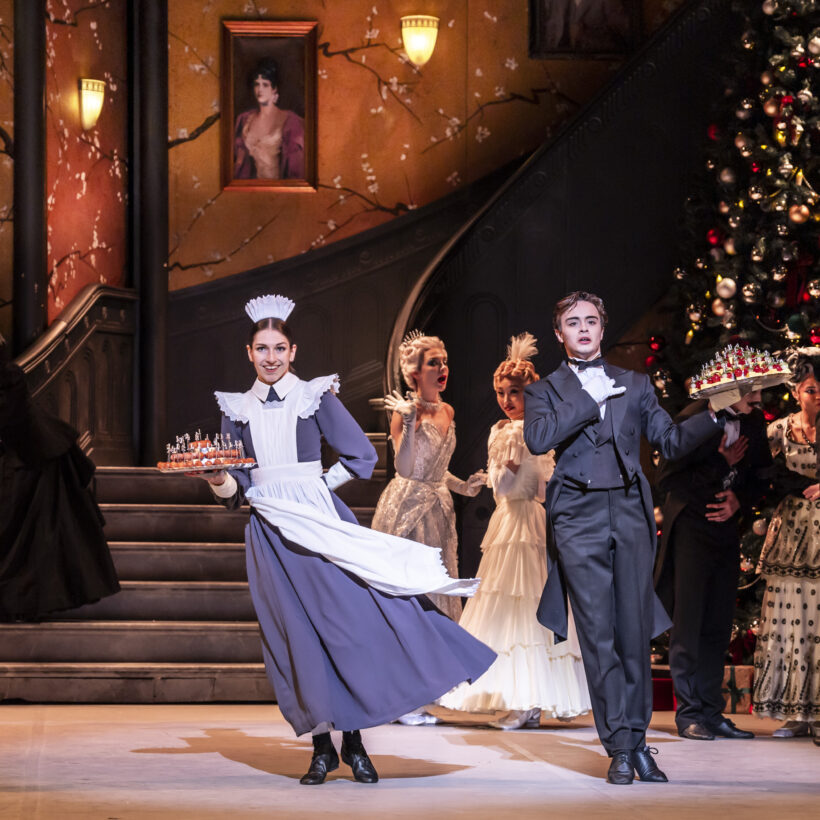
The choreography, designs and music of this production create a real sense of wonder. But in Act I’s party scene, you can also catch a sparkling stage illusion in the glamorous celebrations at Clara’s family home. When the eccentric Drosselmeyer arrives, everyone gathers to see his spellbinding tricks for themselves.
To create these playful tricks English National Ballet worked with John Bulleid, Illusion Designer and Director, to bring real magic to the stage.

3. The Nutcracker is… an actual nutcracker
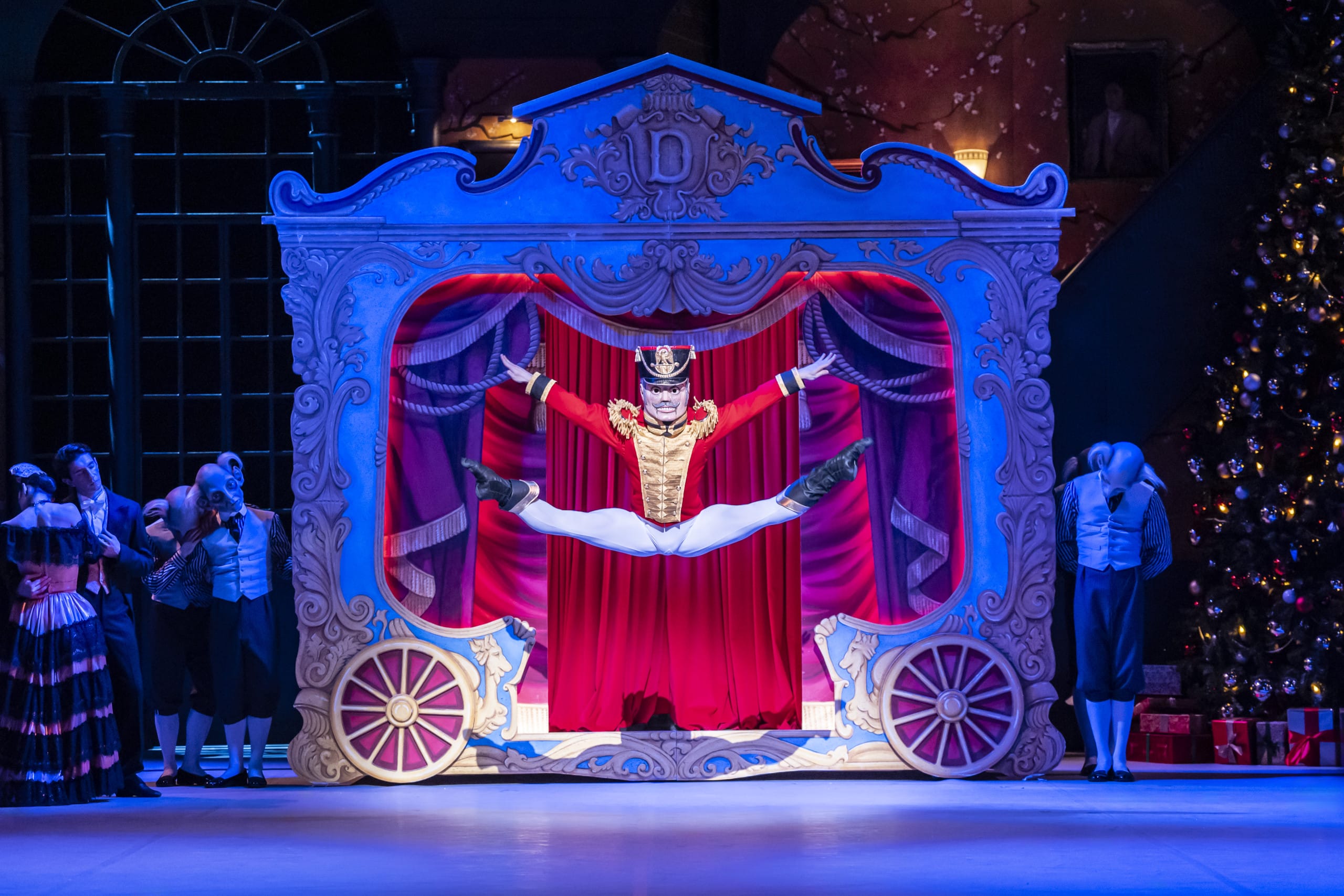
In many productions, the Nutcracker is a symbolic “nutcracker-like” doll. In our production, Clara receives an actual wooden nutcracker – if you look closely, you can even spot its mouth opening and closing to crack nuts.
Once Drosselmeyer’ s magic brings him to life, the Nutcracker charms Act I with sharp puppet-like movements and engaging precision. He sparks Clara’s imagination and gives her the courage to embark on a fantastical journey of discovery as her adventure unfolds.
4. The Christmas tree grows… and grows… and grows
As nighttime descends on Christmas Eve, we enter a dream world where reality becomes fantasy. When Clara falls asleep by the Christmas tree, we see it grow and grow, transforming to vast scale. This scene sets the change in the narrative, from a sleepy Christmas night to a fantastical world. As Clara shrinks to toy-size, she confronts the Rat King amidst the chaos of the battle scene featuring oversized props and marching soldiers. And for the most attentive eyes, you might spot a giant piece of cheese on a toothpick – a huge version of the finger food being served in the previous party scene.
The battle scene in Nutcracker is staged with cinematic scale, culminating in the pas de deux (duet) where Clara first sees her Nutcracker transformed into a Prince.
View this post on Instagram
5. A world of tastes to enjoy and discover…
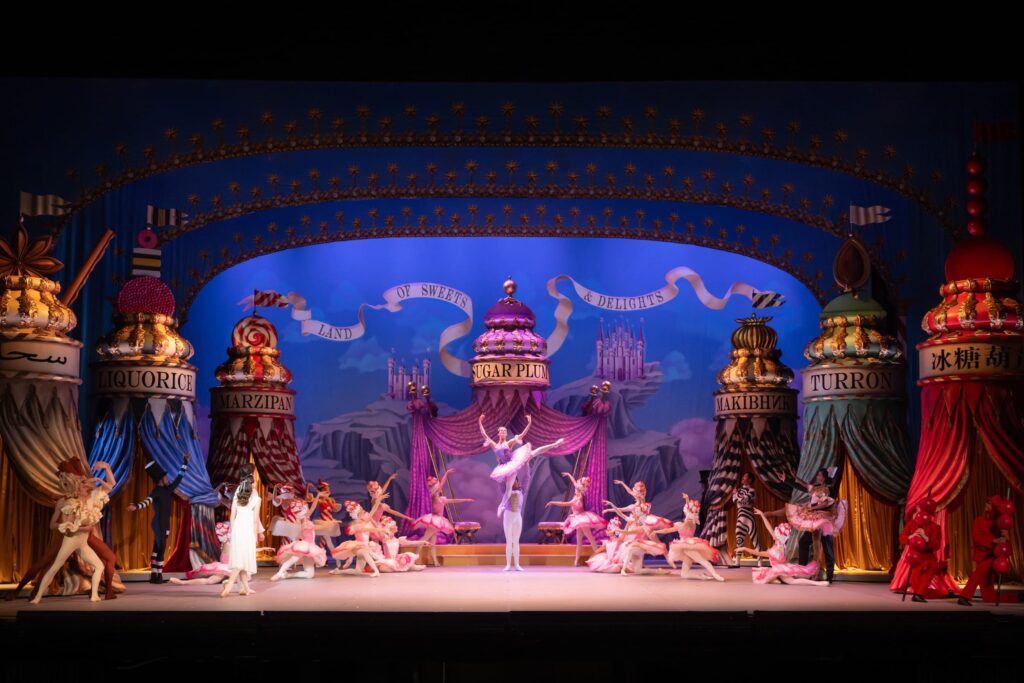
In this production, the creative team took inspiration from the original Nutcracker synopsis for the Land of Sweets and Delights, celebrating delicacies from around the world, rather than presenting national dances.
When Clara and the Nutcracker Prince enter this colourful world, they are welcomed by the elegant Sugar Plum Fairy who invites them to discover a selection of delicious tastes and flavours. Each bite is a prompt for a new dance, from Spanish nougat to Middle Eastern sahlab, Chinese tanghulu or Ukrainian makivnyk. There is even a surprising box of Liquorice Allsorts, followed by marzipans and buttercream roses, that set the mood for the majestic Sugar Plum Fairy pas de deux.
Both choreographers and designer Dick Bird wanted to weave the tastes from the Land of Sweets and Delights throughout the ballet to better connect Acts I and II. For that reason, you might spot some of them in the street market and party scenes in the first half of Nutcracker, along with the magical frosted sugar plums.
6. How do Clara and the Prince reach the Land of Sweets and Delights?
A flying seahorse of course!
One of Nutcracker’s most enchanting design elements is the shimmering, fantastical carriage that carries Clara and the Nutcracker Prince to the magical Land of Sweets and Delights.
At the end of Act I, in the whirl of Clara’s first feelings of love, the Snowflakes charm audiences with twinkling choreography set to Tchaikovsky’s iconic Waltz of the Snowflakes. The ensemble is guided by the Ice Queen who unveils a frosted seahorse to transport Clara and the Nutcracker Prince to the next chapter of their adventure.
7. You may notice the music feels… brighter?
While Tchaikovsky’s famous score remains untouched, the pacing and speed are approached with fresh musical insight. Under the baton of English National Ballet’s Music Director, Maria Seletskaja, the speed – or tempi – of the music aligns more closely with Tchaikovsky’s original intention.
In an interview for the Financial Times, Aaron Wakin, Artistic Director, speaks more about the music in this Nutcracker: “Through classical ballet’s evolution, technique has been getting so developed that the tempi have become painfully slow,” says Watkin. “You need the tempi to be diverse, otherwise you kind of lose people.”
8. A hidden world of hand-crafted magic
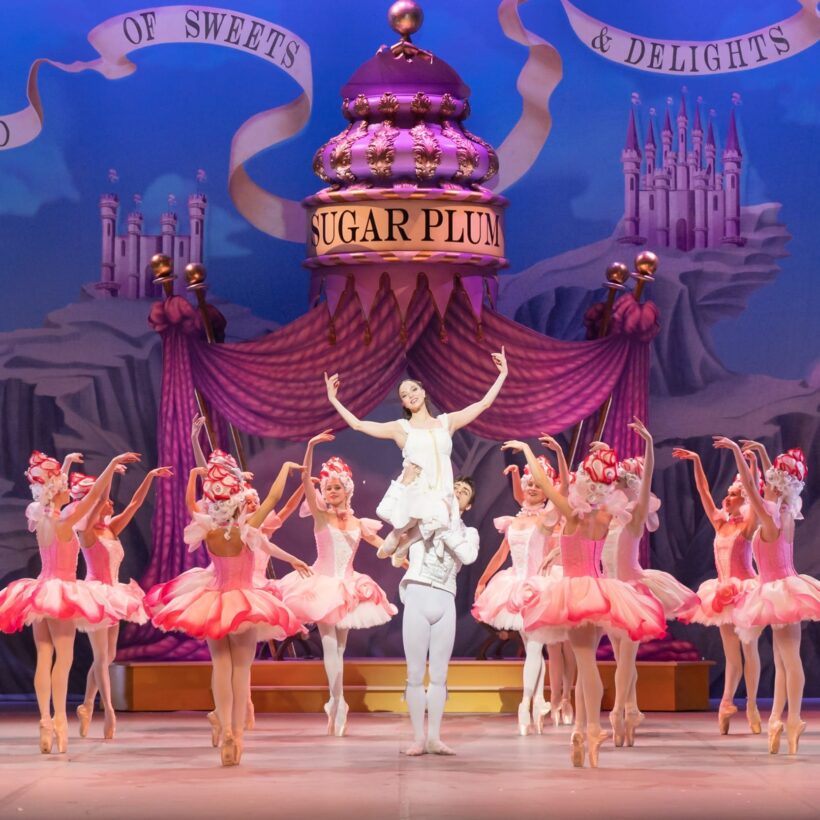
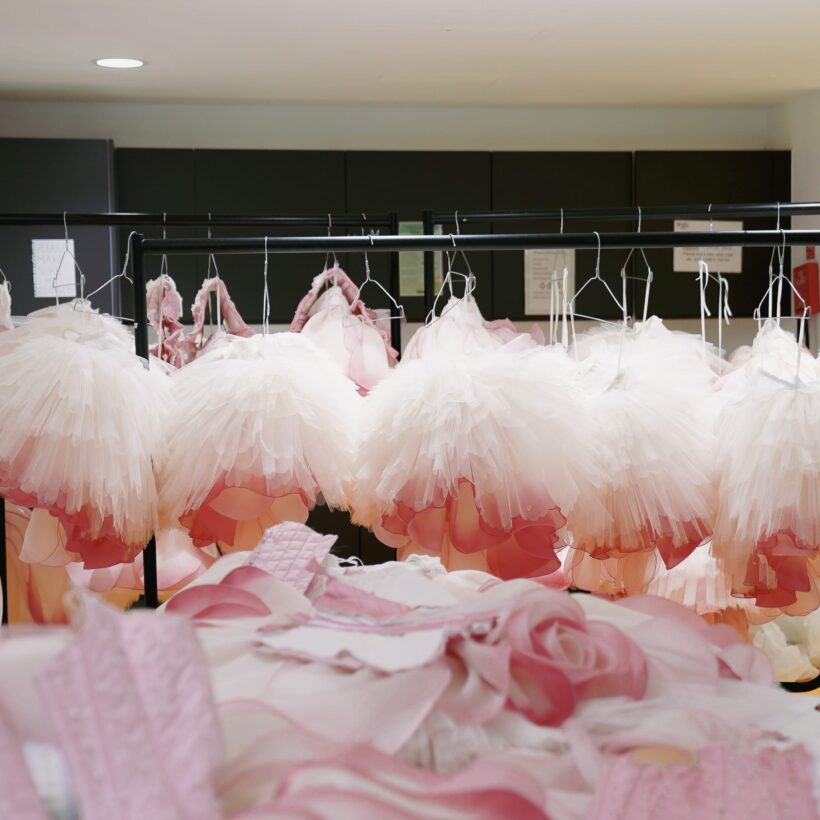
Behind the scenes there’s also magic happening in English National Ballet’s technical departments. In Act II, we see the Buttercream Roses swirl and dance to the Waltz of the Flowers. Their tutus are made with over 1,000 individual petals – dyeing the fabric for one tutu alone takes 4 and a half hours. The petals are then individually shaped and stiffened using fishing twine to give the Roses their delicate flutter on stage.
These small details embody the dedication that goes into this production. Hundreds of hours of craft and skill from the creatives and artists who bring this festive world to life.
9. Look out for the suffragettes
Though traditional at heart, this Nutcracker hints at the changing world around Clara – the heroine of our story. As the ballet progresses you’ll see nods to Edwardian social shifts, including the suffragettes.
The image of suffragettes protesting for their right to vote makes a vivid impression on Clara. She sees them twice: first when she’s with her mother outside Drosselmeyer’s Emporium and later in the peak of the battle scene, where Clara draws strength from the characters around her to fight the Rat King.
Clara really is at the heart of English National Ballet’s Nutcracker – a character reimagined with spark, courage and actively contributing to the narrative. She is not a girl who observes the magic; she steps into it, shapes it, and sometimes even leads it.
10. You can watch it on tv, too!
Whether you’ll be watching it for a first, second, or multiple time, you can also enjoy our Nutcracker at home this Christmas, as it will be broadcast by Sky Arts on 24th December at 2:15pm. You can even make a day of it by joining at 12:15 and 1:15pm for the 2 part-documentary series Nutcracker: Backstage with English National Ballet.
You can stream Sky Arts live or on catch up on Sky and NOW TV (subscription required).
Sky Arts is also available to watch free (when live) on Freeview (Channel 36), Freesat, BT TV, Virgin Media, and TalkTalk TV in the United Kingdom.
We’re also going to premiere Nutcracker in the U.S. on Tuesday 16th December, as part of the PBS Great Performances series. Watch it at 9/8c on PBS, pbs.org/gperf and the PBS app.
Feel the festive magic of English National Ballet’s Nutcracker at the London Coliseum from 11 December 2025 – 11 January 2026.
Related news

Nutcracker: welcoming new audiences to ballet
With the festive season upon this, we were delighted to open our winter season at the London Coliseum and welcome...
Ballet Futures: Isabella in Nutcracker
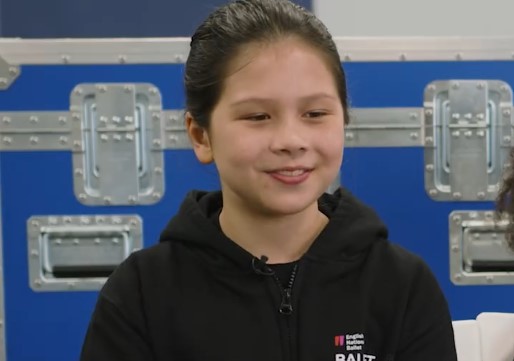
Helping young dancers to dream big... Isabella is one of the children supported by our Ballet Futures programme.
Nutcracker: Buttercream Roses (extract)
Buttercream Roses lights up the London Coliseum with all the magic, sparkle, and festive fun of Nutcracker.
Nutcracker: Butler and Maid (extract)
The Butler and the Maid cause mischief at the Stahlbaums' Christmas party in this humorous clip from Nutcracker.
Nutcracker: Prologue (extract)
Step onto the streets of Edwardian London in this glorious extract from the beginning of our Nutcracker.
Creating the world of Nutcracker: Interview with designer Dick Bird
Our new production of Nutcracker invites audiences to join us on a fantastical journey.