Everything you need to know about Proper Conduct by Kameron N. Saunders
Who is Kameron N. Saunders?
Saunders is a prize-winning choreographer who has also built a huge following as a commercial dancer for some of the world’s biggest artists.
His dance background is varied. Before graduating with a degree in dance and choreography, he trained in ballet, tap, jazz, as well as West African dance. This broad training, as well as his unique artistic sensibility, translates into a style that is uniquely his own.
“I don’t know if I want to prescribe a particular style to my work. It’s the storyline that informs the choices I make movement-wise”, explains Saunders. “I’ve had diverse training in a wide range of styles, so I pull from all of those things in an effort to support the narrative. I’m more interested in the transformation of the viewer and that flexibility within movement vocabulary. I think it’s really interesting and fun to explore.”
When Aaron S. Watkin, our Artistic Director, saw Saunders’ work for the first time, he was immediately drawn to the fresh approach of his choreography and the emotional resonance it had with the audience. “What struck me immediately was the breadth of Kameron’s stylistic choreographic language. His movement vocabulary is very genre-crossing, very musical – in fact, musicality is right at the forefront of his piece. And it’s uniquely his own: I can’t say that it reminded me of anyone else.”
Across the three parts of Proper Conduct, Saunders lets different aspects of his choreography shine. The three sections form a cohesive whole, but each is different and distinct. “If you think you know Saunders after watching the first act… get ready because act two is different, and act three is completely different again!”, reflects Watkin.

What is Proper Conduct about?
Proper Conduct unfolds in three parts, as a narrator guides us from a carefree world into one where behaviour becomes increasingly self-policed.
The work explores the search for authenticity under society’s gaze. It examines how we engage with one another, how assumptions are projected, and how everyday interactions quietly reinforce ideas of what is — and isn’t — considered “proper.”
In creating the piece, Saunders draws from personal experience, particularly over the last few years. The commission arrived while he was on a worldwide stadium tour that brought newfound visibility and attention, and he found himself navigating the expectations that came with it.
“There is an obligation that comes with being visible to many eyes, many viewers, many people. People form expectations of how you should behave,” says Saunders. “My own relationship to visibility – and how that makes me feel in certain spaces – prompted my ideas for this work.”

Shaped by music
“I am extremely inspired by music”, says Saunders of his style. “I have a background in West African dance: the music that accompanies it explores a wide range of polyrhythms. Leaning into that aspect cultivated my choreographic approach because it has to be musical. And I think that a lot of that has lent itself towards the physicality of my vocabulary.”
This music-first approach is reflected in the care Saunders took in choosing the composers for Proper Conduct. He entrusted the creation of the score to Brandon Finklea and Harold Walker III, with whom he has collaborated on various creative projects in the past.
As soon as I got the commission, I knew I wanted to work with Brandon. He understands my approach to dance. He understands my need for sonic brilliance. And he meets me there in that space. He asks a lot of questions, and we just work really, really well together. Harold – I call him “the renaissance man”. He’s also from St. Louis, where I’m from. He’s a photographer, a videographer, a composer, he is… All things you could imagine. And I also knew that I wanted him to be part of this project. They were both so on board. And they’ve been working together quite beautifully on this. And I’m very, very, very pleased with what they’ve come up with.
The three acts of Proper Conduct feature very different choreography, and they differ sonically as well. Saunders explains: “Act one is orchestral, played by the English National Ballet Philharmonic live. It’s beautiful and it moves me. Act two is an electronic score that is very ambient. There isn’t much of a downbeat in certain places if you could say that. Act three is also electronic in nature, but it’s way more involved. There are lots of tempo changes, lots of crash sounds, it’s meaty and compelling. I think that’s my favourite of the three acts, but I have to say I love it all – Brandon and Harold have executed the score beautifully.”

Bringing a new work to the stage
Proper Conduct is a world premiere. It’s also the latest addition to the company’s varied repertoire, which celebrates tradition while pushing the boundaries of what ballet can be.
“A key part of my artistic vision is forging innovation by offering diverse choreographic voices a platform”, explains Aaron S. Watkin, who was first introduced to Saunders’ work at a performance of his piece for Dallas Black Dance Theatre.
Looking to present a double bill pairing Crystal Pite’s Body and Soul (Part 1) with a new commission, he reached out to Saunders. “It was very important to me to give Kameron artistic freedom to create something that was authentic to him. I said to him: ‘present yourself in London for the first time in whatever way you feel you want to’. And I’m really excited to see what evolves from that.”
Costumes: looking inward and out
The expressive choreography and evocative music for Proper Conduct are complemented by costumes designs by Kimie Nakano, who’s previously worked with us on Akram Khan’s Dust. For each of the three acts, Nakano has designed a different set of costumes, to reflect the differing emotional spaces throughout.
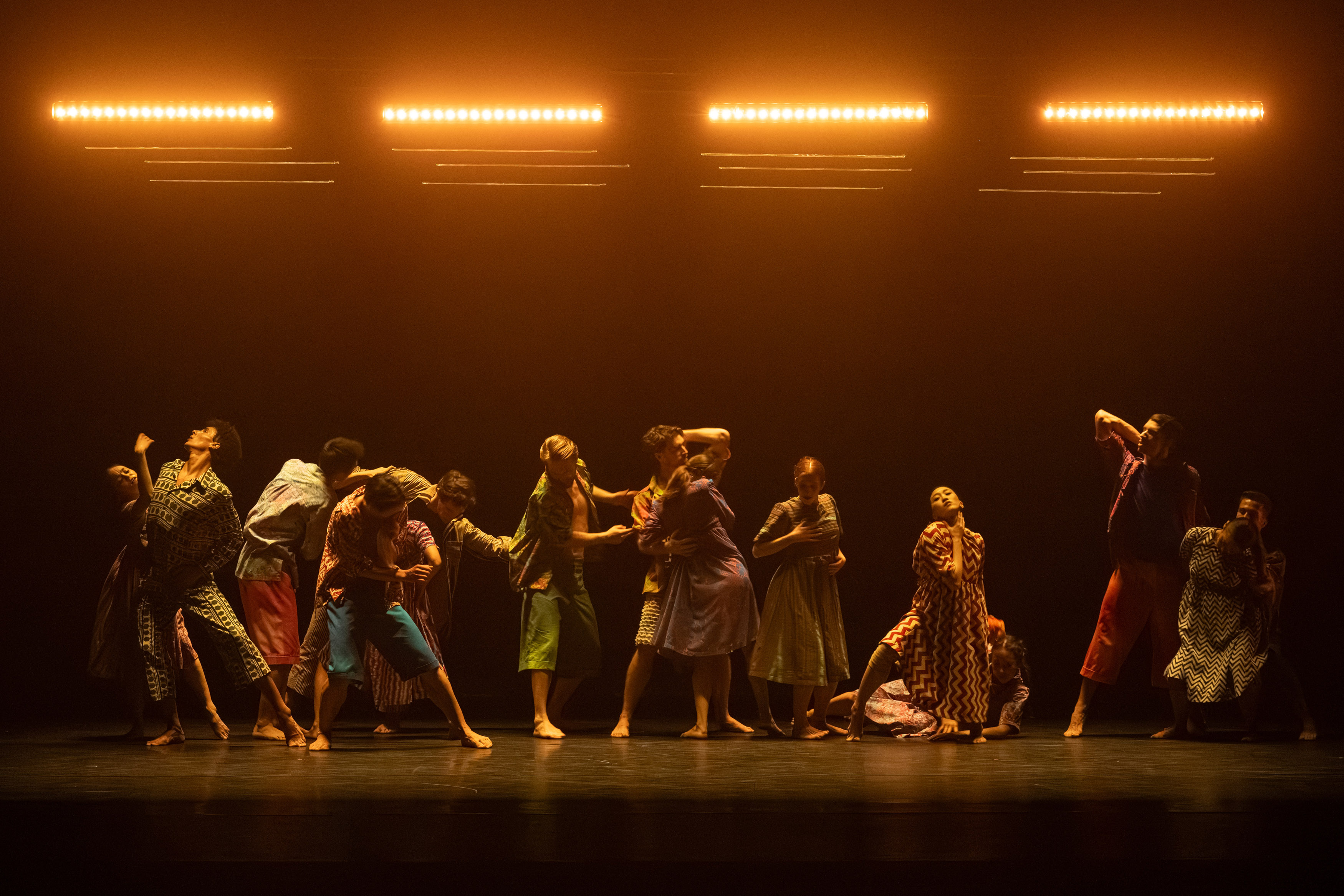
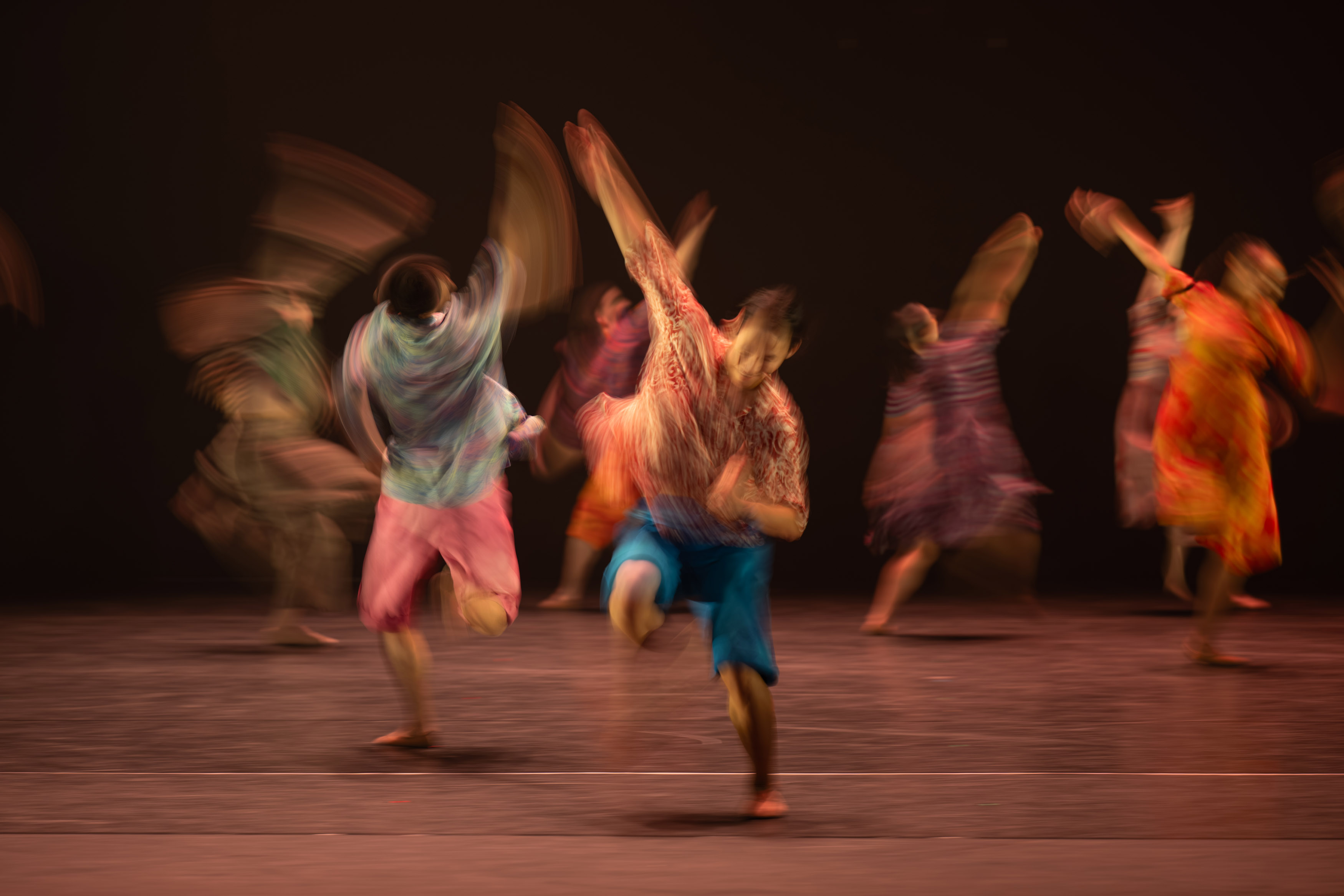
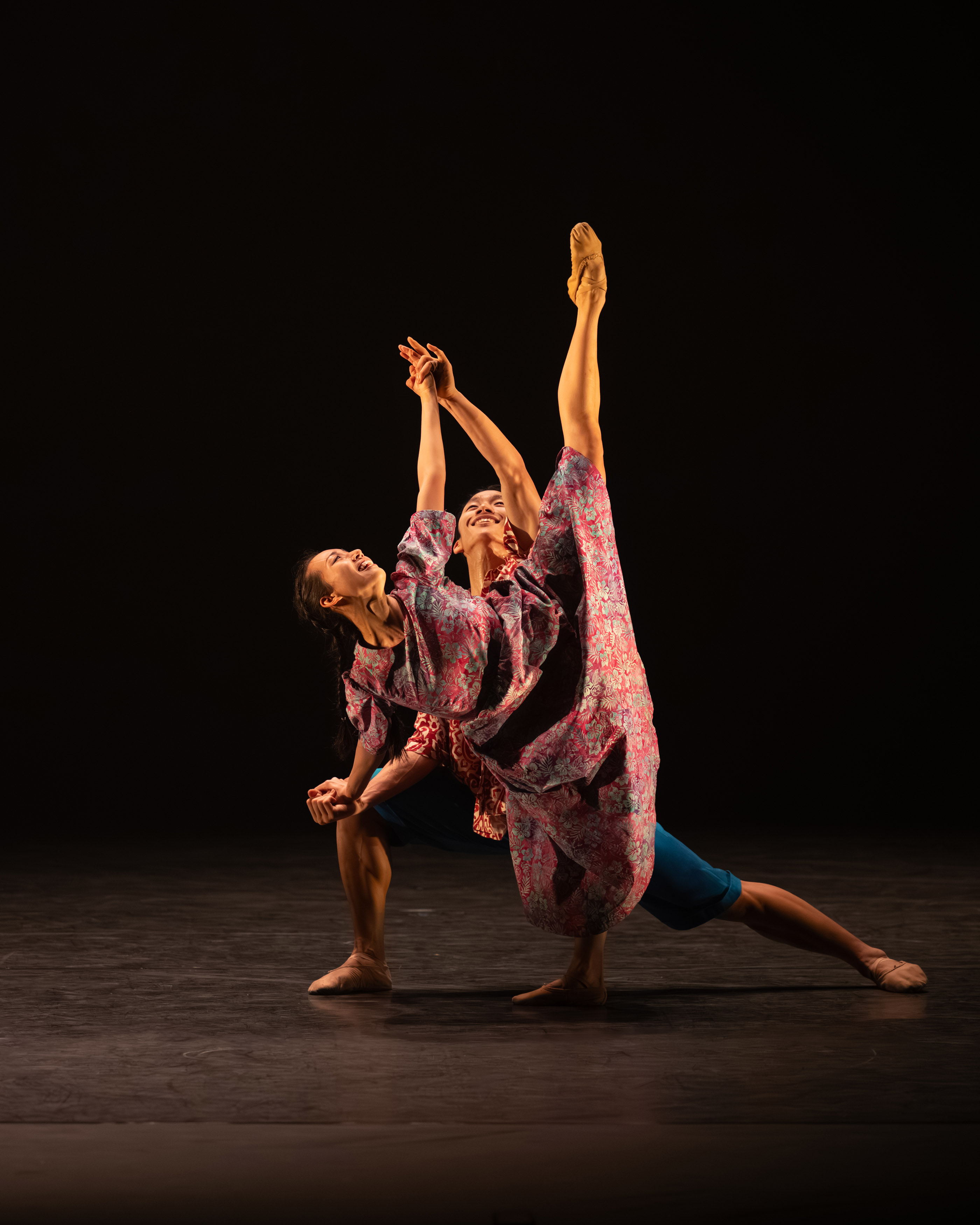
The first act – calm, happy, carefree – sees the dancers clad in vibrant, patterned clothes. The striking colours are balanced by the simplicity of the form – flowing dresses, loose shirts, relaxed trousers. Early in her design process, Nakano decided she wanted to express the diversity of the Company dancers through her design choices. “I chose fabrics that represent all those cultures: European, Asian, African… The fabrics are all different and colourful, coming from different places”, Nakano explains.
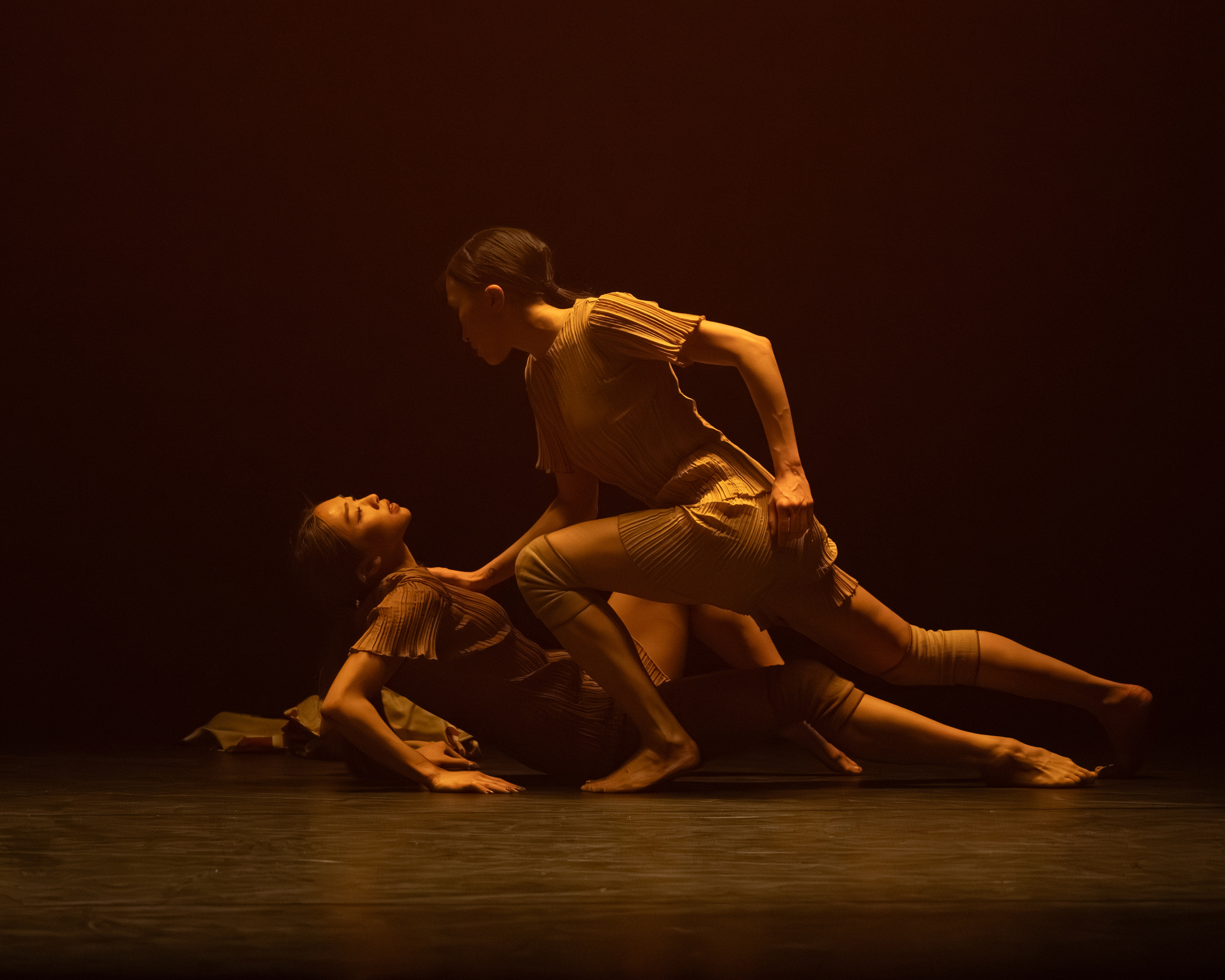
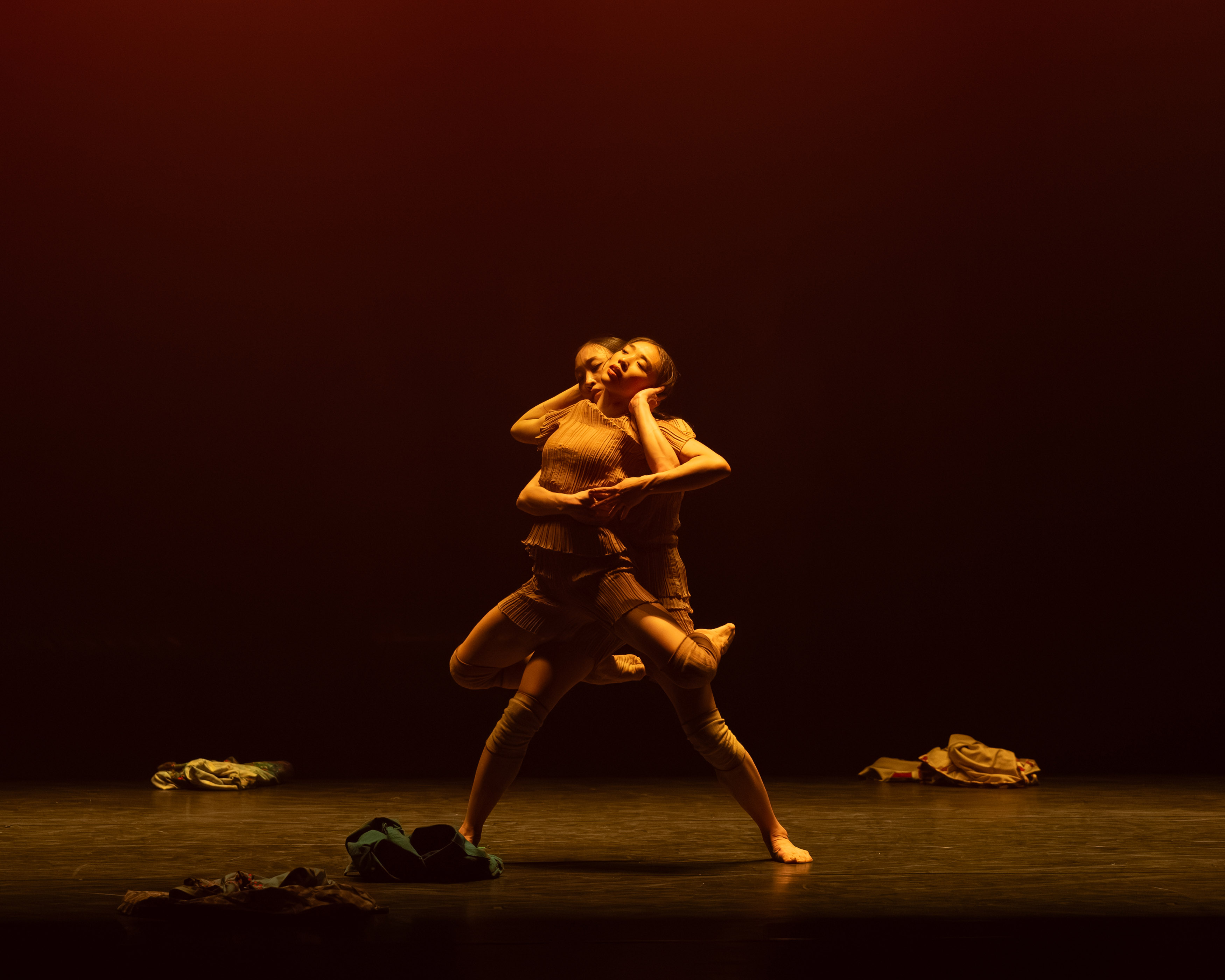
Act two is both a choreographic, musical and visual juxtaposition to the first. To represent the darker part of the narrator’s story, the dancers shed their colourful garments in favour of neutral, skin-tight costumes. As the layers of joyfully expressed identity are shed, the contained, neutral costumes represent a journey into the self.
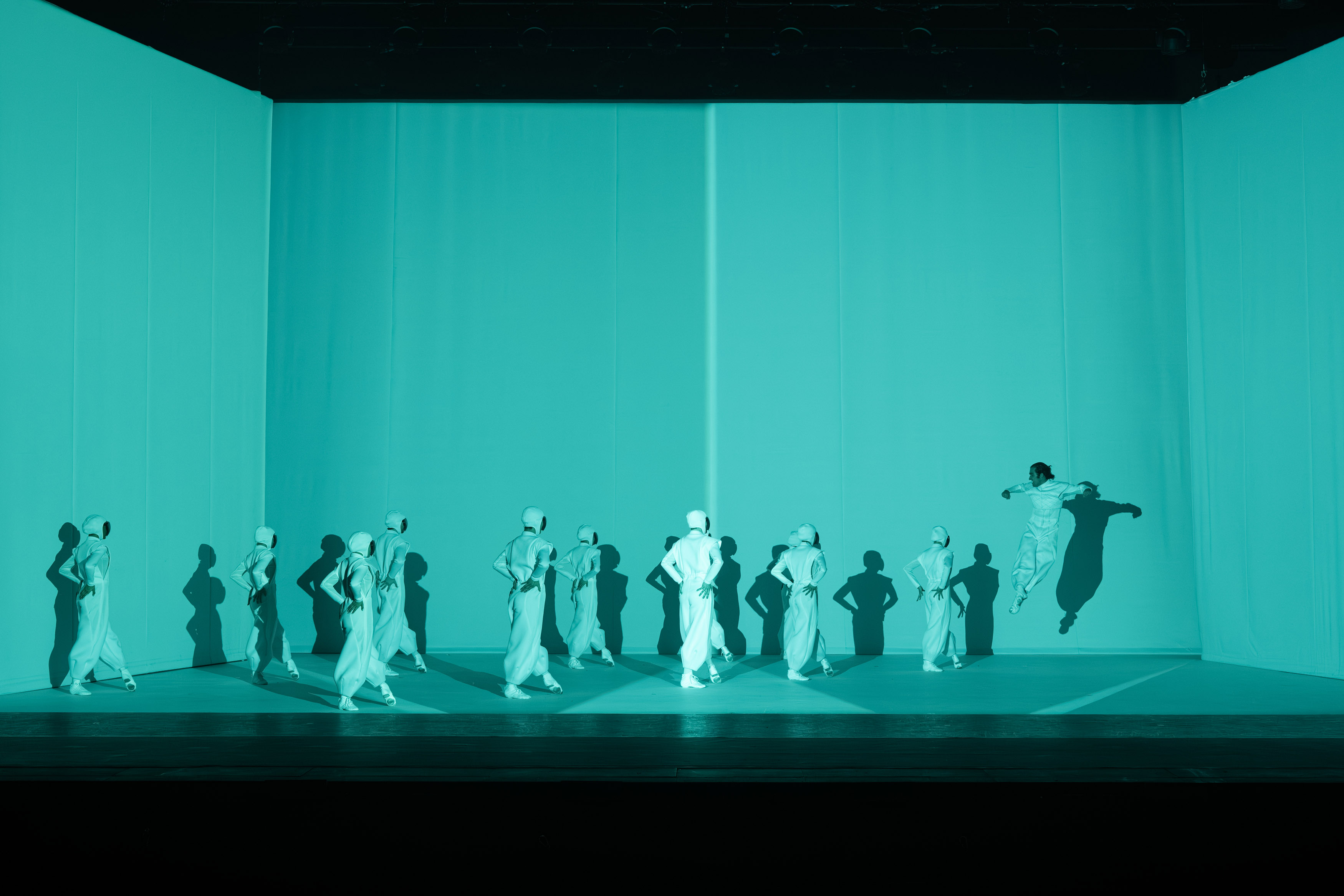
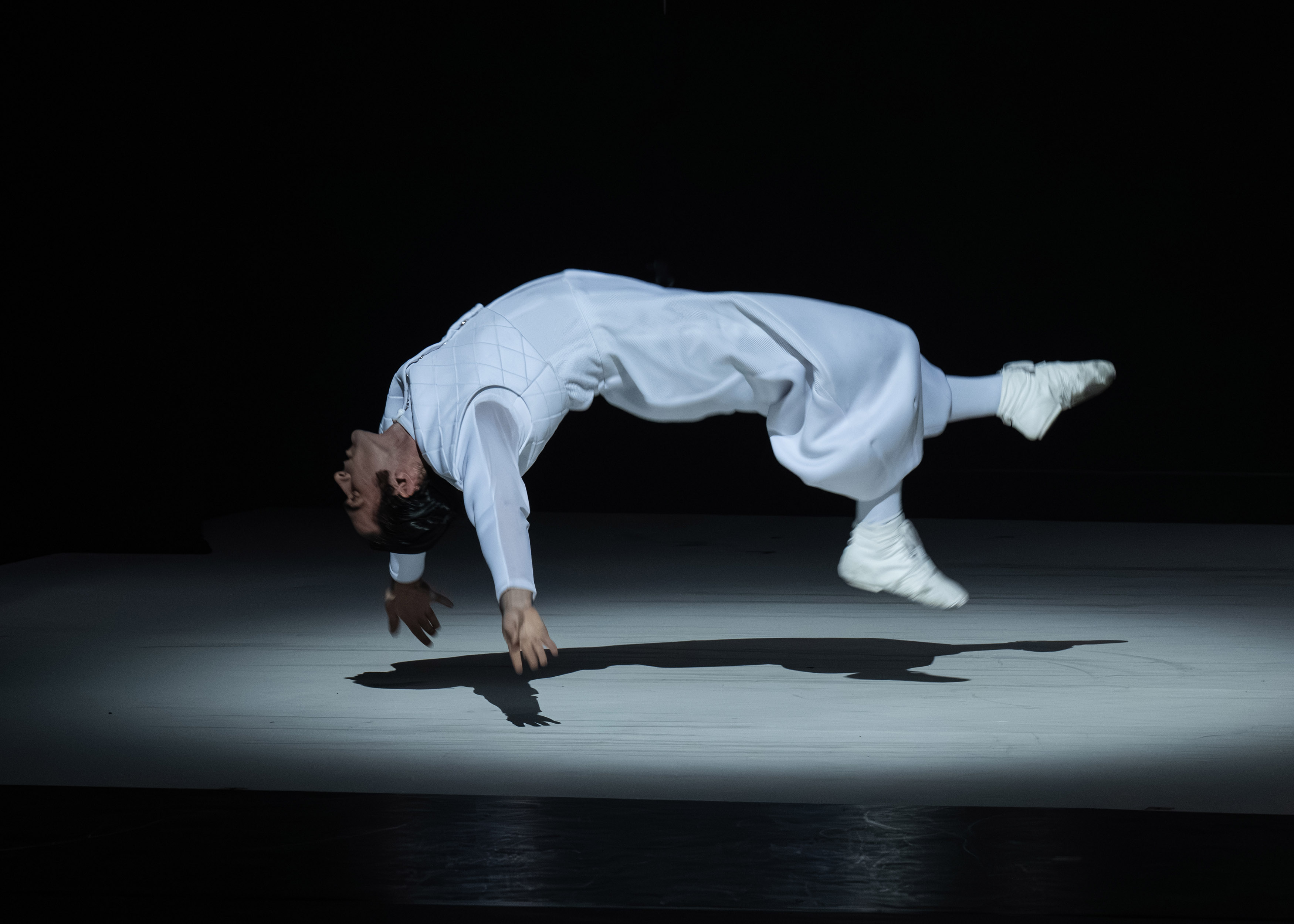
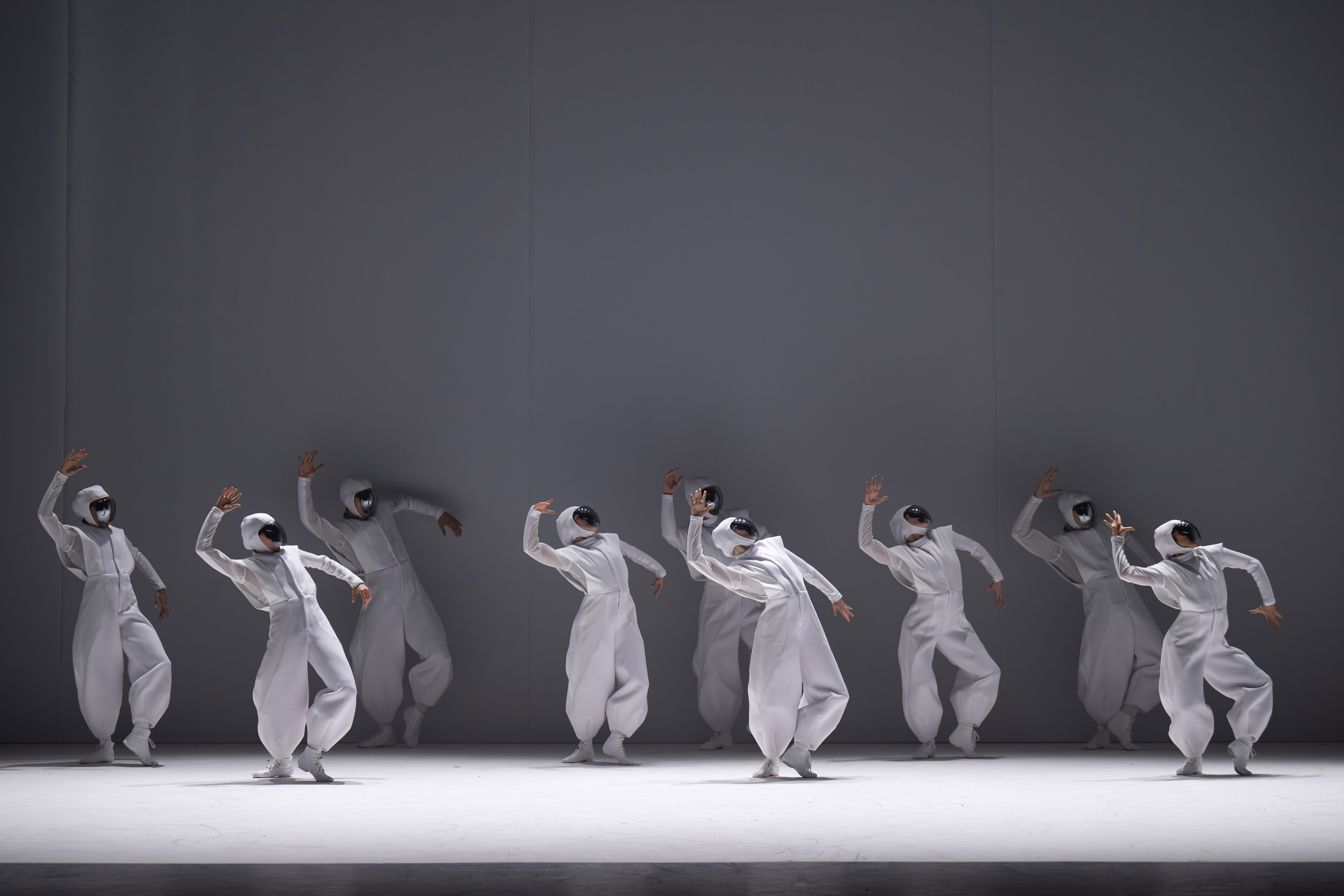
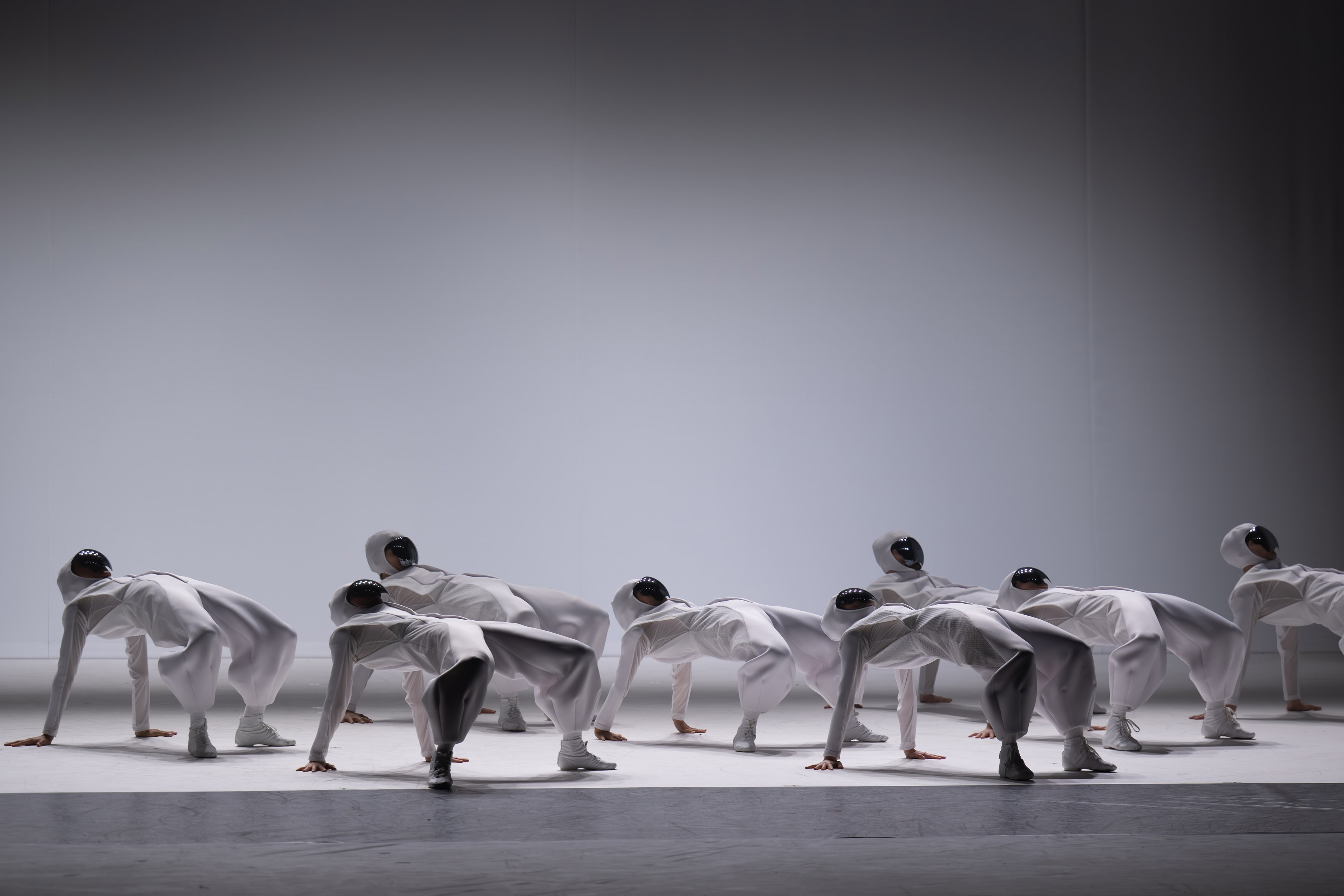
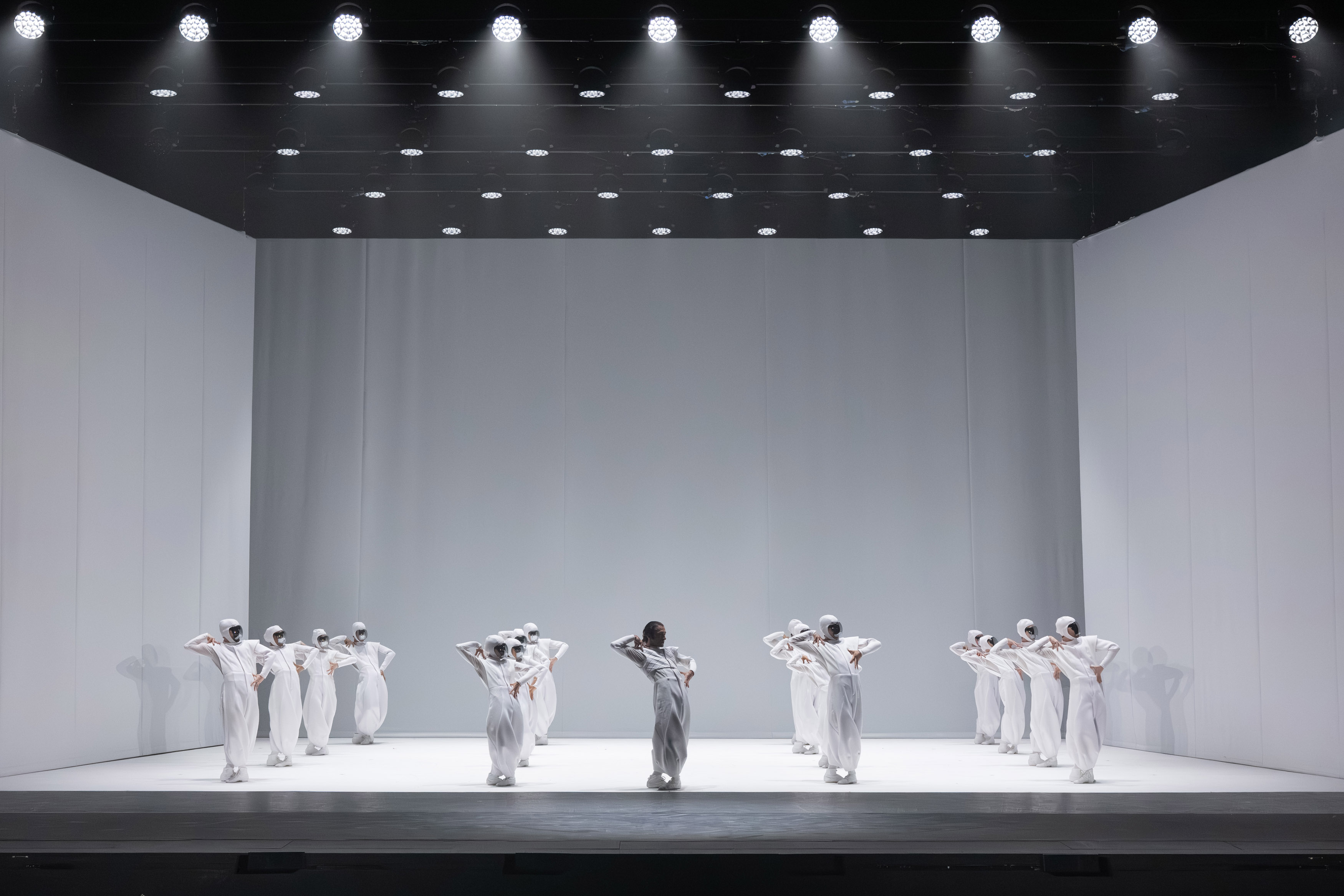
The third and final act sees the costumes change mood again. They move from recognisably casual to futuristic – gender-neutral white uniforms, completed with smooth, reflective face masks. Nakano quotes spacesuits and fencing attire as her inspirations – but the final designs stand out as uniquely their own.
Choreography, music, design and storytelling all come together to move audiences: “I really hope that audiences are transformed by the spectacle”, says Saunders, “I also am very interested in the piece being a catalyst that encourages people to look at how they engage with people around them.”
See Kameron N. Saunders’s Proper Conduct in English National Ballet’s Body & Soul this spring.
Production Sponsor: Cunard
Related news

Body and Soul (Part 1) by Crystal Pite (Extract)
Watch this mesmerising moment from Body and Soul (Part 1) by Crystal Pite - one of the many that leave...

Proper Conduct: Interview with Composers Brandon Finklea and Harold Walker III
Meet Brandon Finklea and Harold Walker III, the composers of the score for Kameron N. Saunders’s Proper Conduct.

Proper Conduct (Extract)
Here’s a first clip from Kameron N. Saunders’s creation for English National Ballet, Proper Conduct.

Interview with Jermaine Spivey on Body and Soul (Part 1)
Hear from Spivey about Pite’s movement language,what it unlocks in dancers, the themes of the piece.

Body & Soul: Interview with Aaron S. Watkin
Take a deep dive into our upcoming programme, Body & Soul, with our Artistic Director, Aaron S. Watkin.
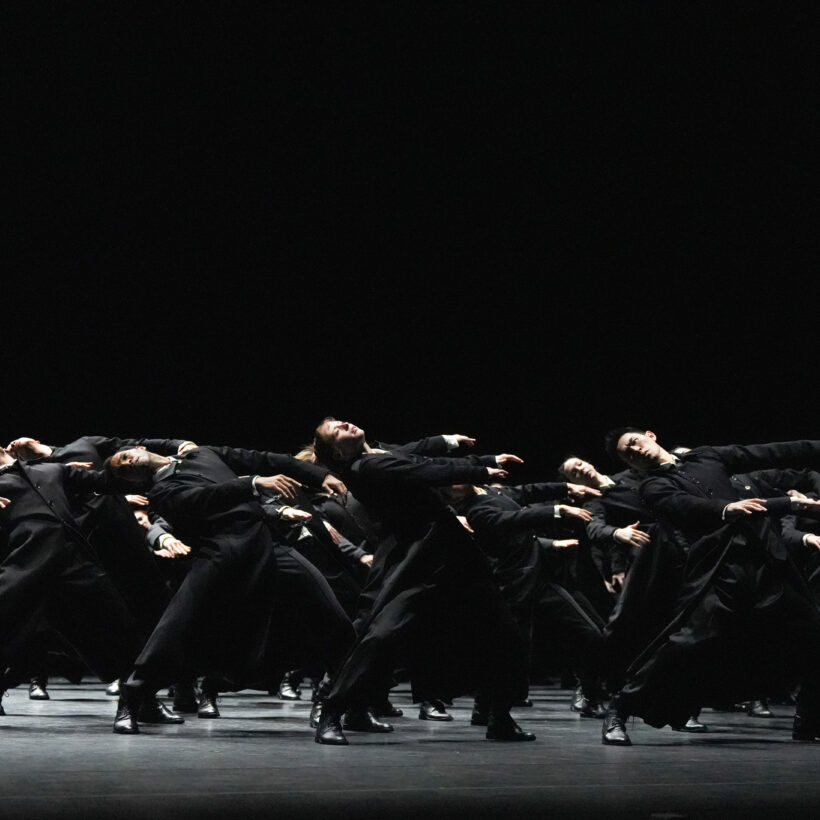
Everything you need to know about Body and Soul (Part 1) by Crystal Pite
Here is everything you need to know ahead of the UK premiere of Crystal Pite's Body and Soul (Part 1).